
Correll category guide
Correll classroom and activity tables
Classroom tables should follow the way learners work alone, regroup, move, and see instruction. Use those activities to test shape, surface, fit, and current Correll options.
Product planning
Planning classroom and activity tables with Correll.
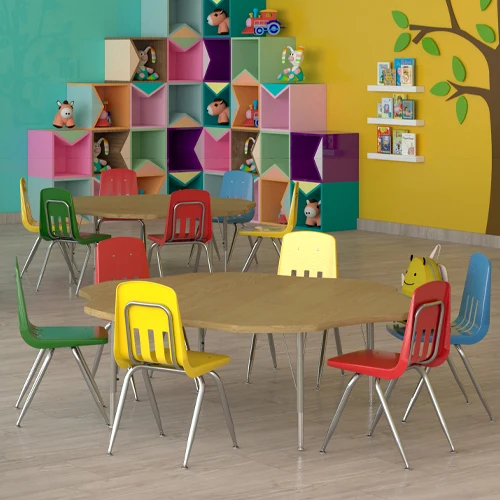
Correll's education collection spans activity tables and collaborative desks in numerous shapes, including rectangular, round, trapezoid, wing, and other group-oriented forms. The current product information also distinguishes thermal-fused and high-pressure laminate choices and includes dry-erase writing surfaces. For classroom planning, match shape and scale to instruction, small-group work, individual focus, and room resets. Evaluate seated reach, sightlines, accessible positions, leg clearance, floor interaction, and storage before selecting a layout. Confirm the exact model, top material, edge, height, legs, and current finish options before specification.
Correll's Education/Classroom collection lists activity tables and collaborative desks in rectangular, round, trapezoid, wing, and other shaped formats. The collection includes thermal-fused laminate, high-pressure laminate, and dry-erase writing-surface options across multiple colors.
Buyer planning guide
What to evaluate before specification.
Use the room, user needs, and project constraints to narrow the right application before comparing product options, finishes, and project requirements.
Planning factor 1
Learning activity and shape
Choose table geometry around direct instruction, discussion, projects, testing, and individual work rather than relying on one default layout.
Planning factor 2
Grouping and sightlines
Test how tables combine, separate, and orient toward instructors, displays, peers, and circulation during common room configurations.
Planning factor 3
Surface selection
Compare laminate and dry-erase options for writing behavior, glare, color, cleaning, edge conditions, and classroom supervision.
Planning factor 4
Fit and movement
Review seated reach, leg clearance, accessible positions, chair pull-back, floor protection, and the effort required for resets.
Where this category can support the plan
Connect the product category to the way the space must work.
- K–12 classrooms
- Project-based learning rooms
- Training and activity spaces
Brief
Document users, activities, room conditions, priorities, and constraints.
Compare
Review application paths, current options, dimensions, and visual direction.
Coordinate
Align finishes, technology, adjacent furniture, clearances, and budget.
Confirm
Validate current specifications, lead times, delivery, and installation requirements.
Frequently asked questions
Questions buyers ask about classroom and activity tables.
Which table shape is best for collaborative learning?
The best shape depends on group size, teaching direction, room geometry, reconfiguration frequency, and how students share materials and technology.
When should a dry-erase tabletop be considered?
It can support visible working and ideation, but glare, marker control, cleaning routines, edge use, and the exact surface instructions need review.
How should classroom resets be tested?
Mock up the most common layouts and assess movement effort, chair clearance, table alignment, sightlines, accessible routes, and storage for displaced pieces.
Keep exploring Correll
Related manufacturer categories.
Compare adjacent applications before narrowing the final product and planning direction.
Start with the room and the work
Bring Pettus the requirements—not just a product name.
Bring Pettus the classroom plan, learner group, activities, and reset needs to begin a Correll table review.