
Global Furniture Group category guide
Global Furniture Group education and healthcare furniture
Education and healthcare briefs should not share a generic checklist. Define the users, activities, cleaning protocols, access needs, and infrastructure for the specific setting first.
Product planning
Planning education and healthcare furniture with Global Furniture Group.
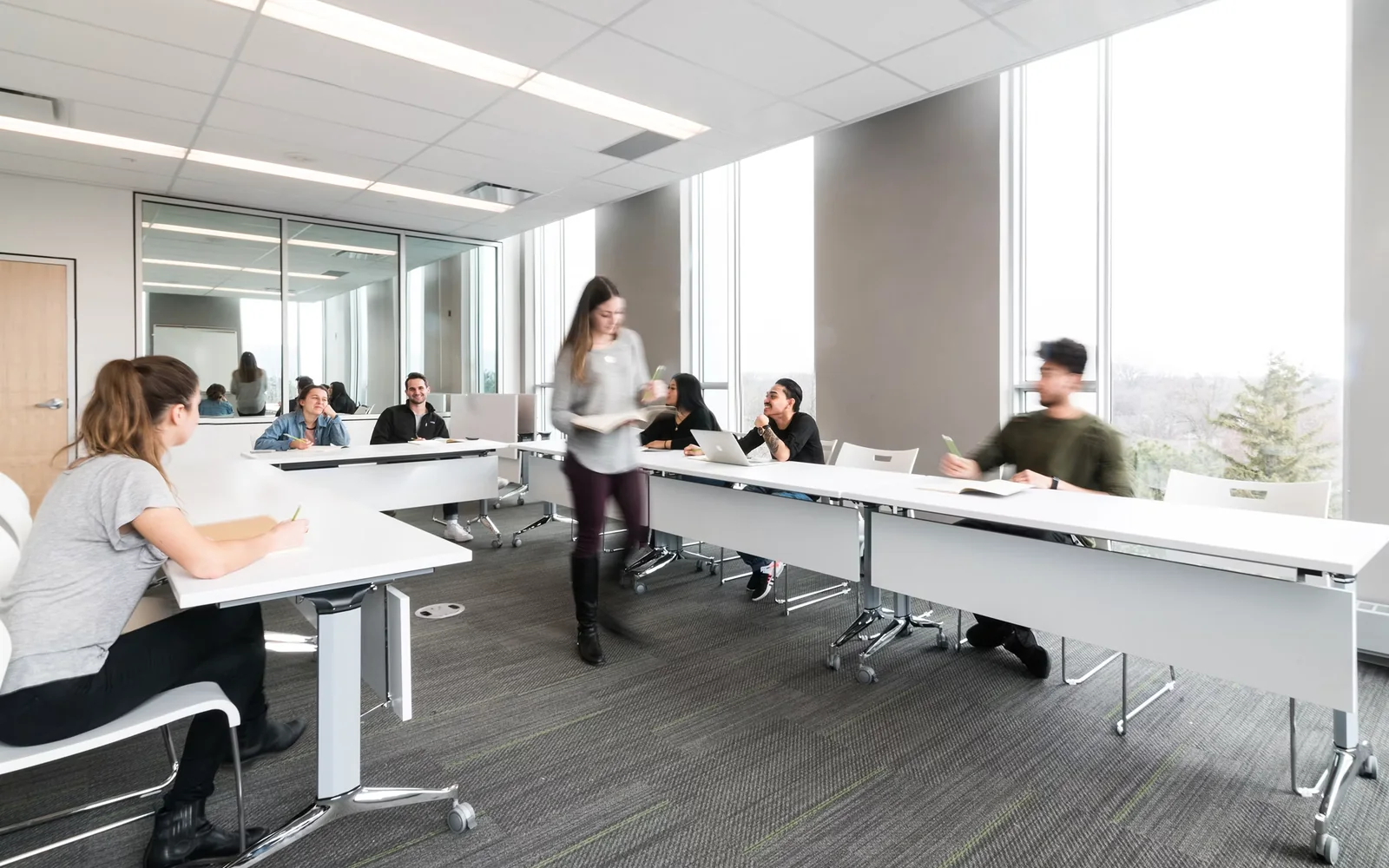
Global explicitly presents furniture solutions for education and healthcare alongside workplace settings. The official homepage links to broad product categories and highlights content for learning environments and care applications. These sectors still require different project criteria: education spaces may prioritize teaching modes and rapid resets, while healthcare settings can add demanding cleaning, privacy, support, and caregiver-workflow needs. Build the plan from users, activities, risk, accessibility, and facility protocols, then evaluate products by room. Confirm materials, testing, cleaning guidance, and configuration details for the exact selections under consideration.
Global states that its furniture solutions serve workplace, education, and healthcare environments. Its homepage provides paths to seating, tables, files, workspaces, learning content, and healthcare-oriented products.
Buyer planning guide
What to evaluate before specification.
Use the room, user needs, and project constraints to narrow the right application before comparing product options, finishes, and project requirements.
Planning factor 1
Users and activities
Map learners, educators, patients, visitors, and staff to the postures, durations, support, and interactions required in each room.
Planning factor 2
Cleaning and materials
Compare seams, surface transitions, upholstery choices, and manufacturer care guidance with the facility's actual cleaning protocols.
Planning factor 3
Flexibility and control
Decide where mobility and reconfiguration help activities and where stable, predictable placement is more important.
Planning factor 4
Access and infrastructure
Coordinate accessible clearances, sightlines, power, technology, storage, and staff workflows at the complete-room level.
Where this category can support the plan
Connect the product category to the way the space must work.
- Learning commons
- Patient waiting areas
- Caregiver work zones
Brief
Document users, activities, room conditions, priorities, and constraints.
Compare
Review application paths, current options, dimensions, and visual direction.
Coordinate
Align finishes, technology, adjacent furniture, clearances, and budget.
Confirm
Validate current specifications, lead times, delivery, and installation requirements.
Frequently asked questions
Questions buyers ask about education and healthcare furniture.
Can one furniture approach cover both education and healthcare?
Some products may cross settings, but user needs, cleaning protocols, risk, accessibility, and operations should be evaluated separately for every room.
What documentation should a healthcare team review?
Review current product materials, cleaning and care guidance, applicable test information, configuration details, and facility-specific infection-prevention requirements.
How can education furniture support changing activities?
Plan around transitions among instruction, group work, individual focus, and technology use, then assess mobility, storage, and reset effort for the chosen pieces.
Keep exploring Global Furniture Group
Related manufacturer categories.
Compare adjacent applications before narrowing the final product and planning direction.
Start with the room and the work
Bring Pettus the requirements—not just a product name.
Share the setting, users, facility protocols, room plan, and project requirements with Pettus to review Global categories.